Save £500 off your polar cruise

South Greenland: Exploring Glaciers, Fjords and Viking Culture

Reykjav├нk - Reykjav├нk

Choose Your Date
Loading new tour date...
Next Step - Choose Your Cabin
Ultramarine
199 Guests
12 Days
Our 12-day South Greenland: South Greenland: Exploring Glaciers, Fjords and Viking Culture takes you to remote Greenlandic settlements rarely seen by independent travelers. This itinerary delivers some of the wildest landscapes youтАЩve ever imagined: towering icebergs and sweeping glaciers, plus the chance to see the Greenland Ice SheetтАФthe second-largest ice mass on the planet. For Viking enthusiasts, South Greenland is one of the best places on Earth to experience Norse history. You can step into Viking ruins that date back to 985.
See More

Activities

Hiking

Lectures

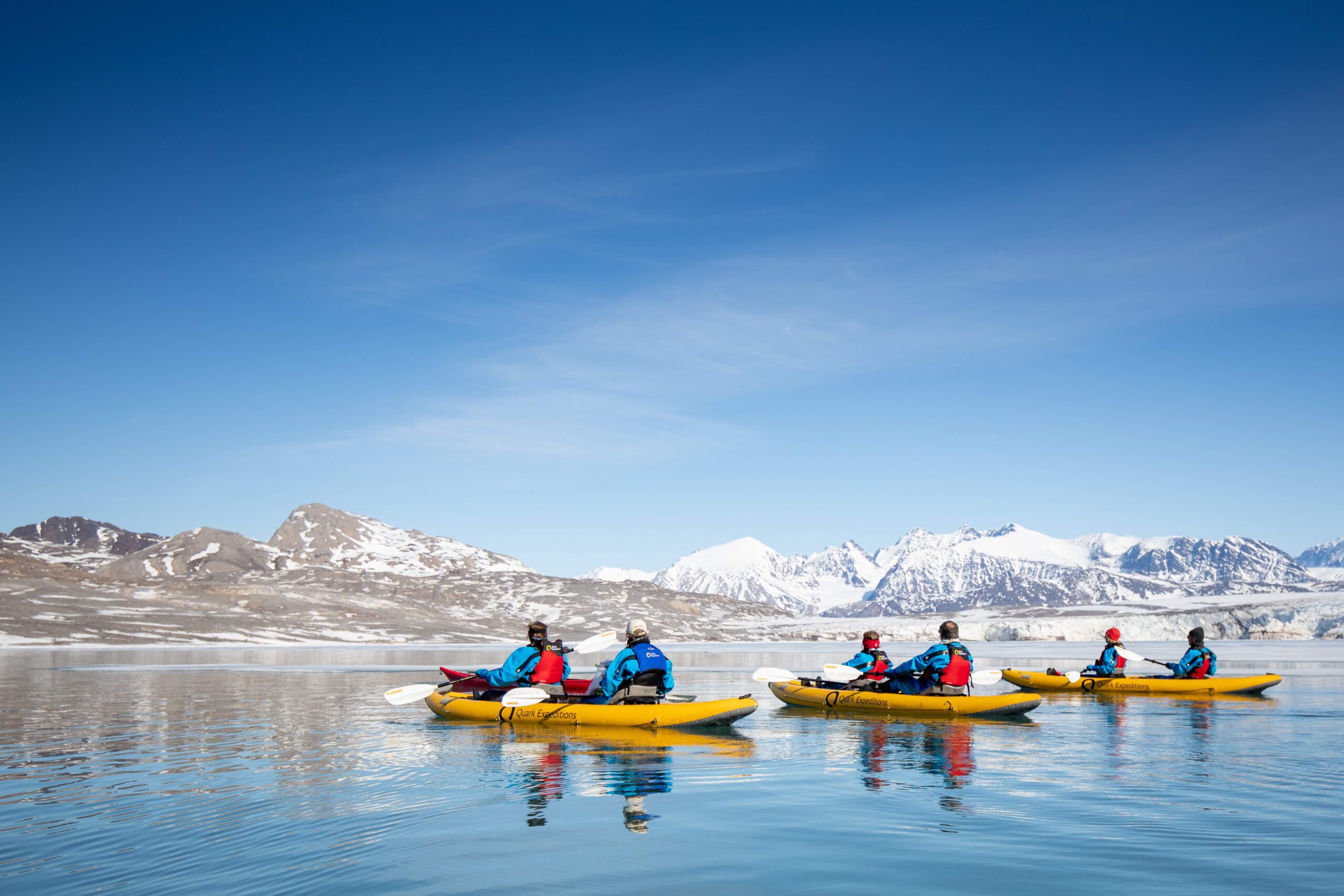
Paddling Excursion

*

Polar Plunge

Sea Kayaking

*

Wildlife Watching

Zodiac Cruises

* Optional with additional cost

Itinerary

city view of Reykjavik
Day 1

Reykjav├нk

Arrive in the Icelandic capital and make your way to the group hotelтАФincluded in the Charter Flight & Hotel PackageтАФnear Keflavik airport. You will have the rest of the day to explore this fascinating city, known for its Norse history and stunning architecture. If you do plan to visit the city of Reykjavik, make sure you allow for a one-hour transfer (by taxi or public transit) between Keflavik and Reykjav├нk.

Sprawling Reykjav├нk, the nation's nerve center and government seat, is home to half the island's population. On a bay overlooked by proud Mt. Esja (pronounced eh-shyuh), with its ever-changing hues, Reykjav├нk presents a colorful sight, its concrete houses painted in light colors and topped by vibrant red, blue, and green roofs. In contrast to the almost treeless countryside, Reykjav├нk has many tall, native birches, rowans, and willows, as well as imported aspen, pines, and spruces.Reykjav├нk's name comes from the Icelandic words for smoke, reykur, and bay, v├нk. In AD 874, Norseman Ing├│lfur Arnarson saw Iceland rising out of the misty sea and came ashore at a bay eerily shrouded with plumes of steam from nearby hot springs. Today most of the houses in Reykjav├нk are heated by near-boiling water from the hot springs. Natural heating avoids air pollution; there's no smoke around. You may notice, however, that the hot water brings a slight sulfur smell to the bathroom.Prices are easily on a par with other major European cities. A practical option is to purchase a Reykjav├нk City Card at the Tourist Information Center or at the Reykjav├нk Youth Hostel. This card permits unlimited bus usage and admission to any of the city's seven pools, the Family Park and Zoo, and city museums. The cards are valid for one (ISK 3,300), two (ISK 4,400), or three days (ISK 4,900), and they pay for themselves after three or four uses a day. Even lacking the City Card, paying admission (ISK 500, or ISK 250 for seniors and people with disabilities) to one of the city art museums (Hafnarh├║s, Kjarvalssta├░ir, or ├Бsmundarsafn) gets you free same-day admission to the other two.

nuuk
Day 2

Nuuk (Godthaab)

After an early breakfast at the hotel, your group will transfer to the airport and board our private charter flight to Nuuk, Greenland. Upon arrivalтАФand if time allowsтАФyou may be transferred from the airport to a central downtown location to enjoy some time on your own to explore this quaint port town before making your way to the pier. After a late afternoon embarkation, you will depart GreenlandтАЩs capital city en route to the stunning Arctic wilderness and picturesque coastal communities.

Nuuk, meaning тАЬthe capeтАЭ, was GreenlandтАЩs first town (1728). Started as a fort and later mission and trading post some 240 kilometers south of the Arctic Circle, it is the current capital. Almost 30% of GreenlandтАЩs population lives in the town. Not only does Nuuk have great natural beauty in its vicinity, but there are Inuit ruins, Hans EgedeтАЩs home, the parliament, and the Church of our Saviour as well. The Greenlandic National Museum has an outstanding collection of Greenlandic traditional dresses, as well as the famous Qilakitsoq mummies. The Katuaq Cultural CenterтАЩs building was inspired by the undulating Northern Lights and can house 10% of NuukтАЩs inhabitants.

Qeqertarsuaq
Day 4

Ikersuaq

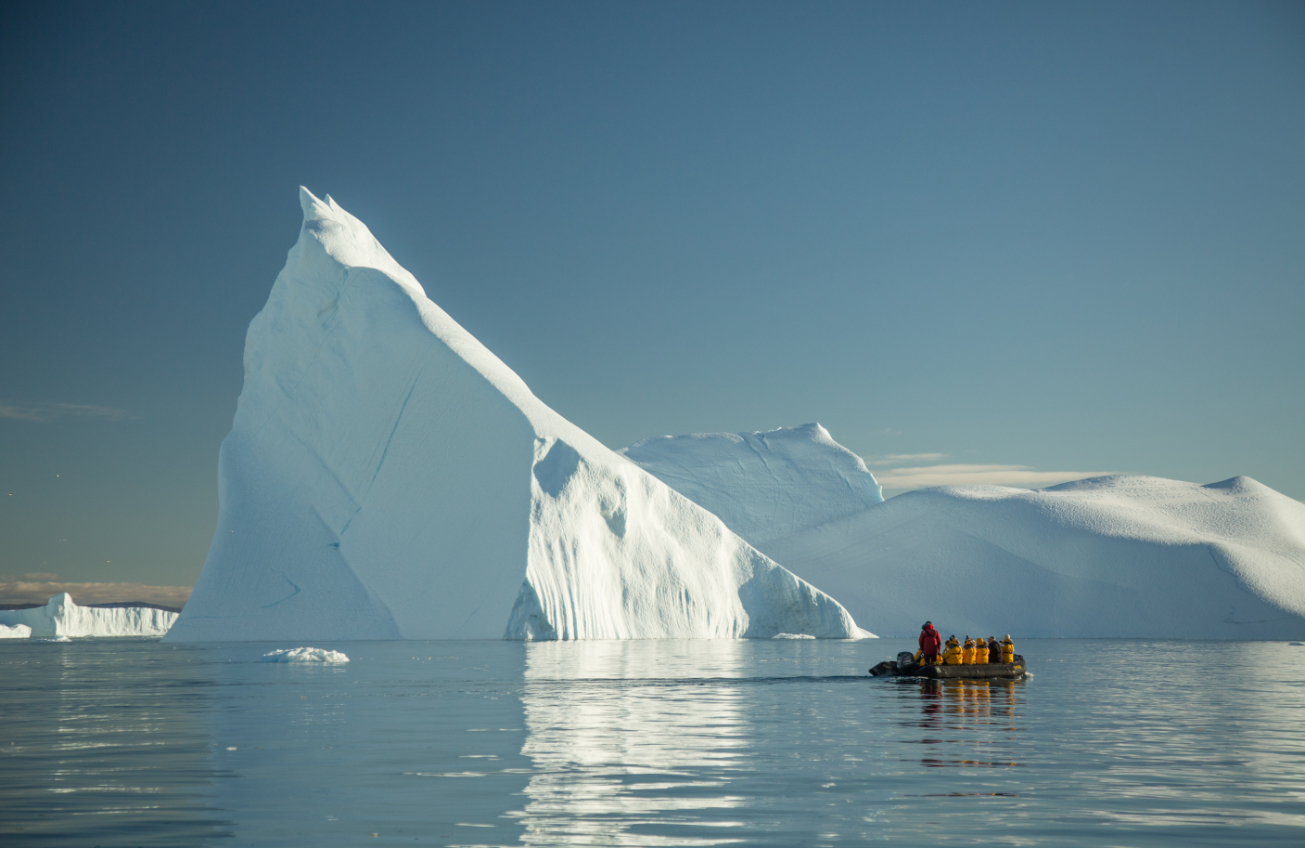
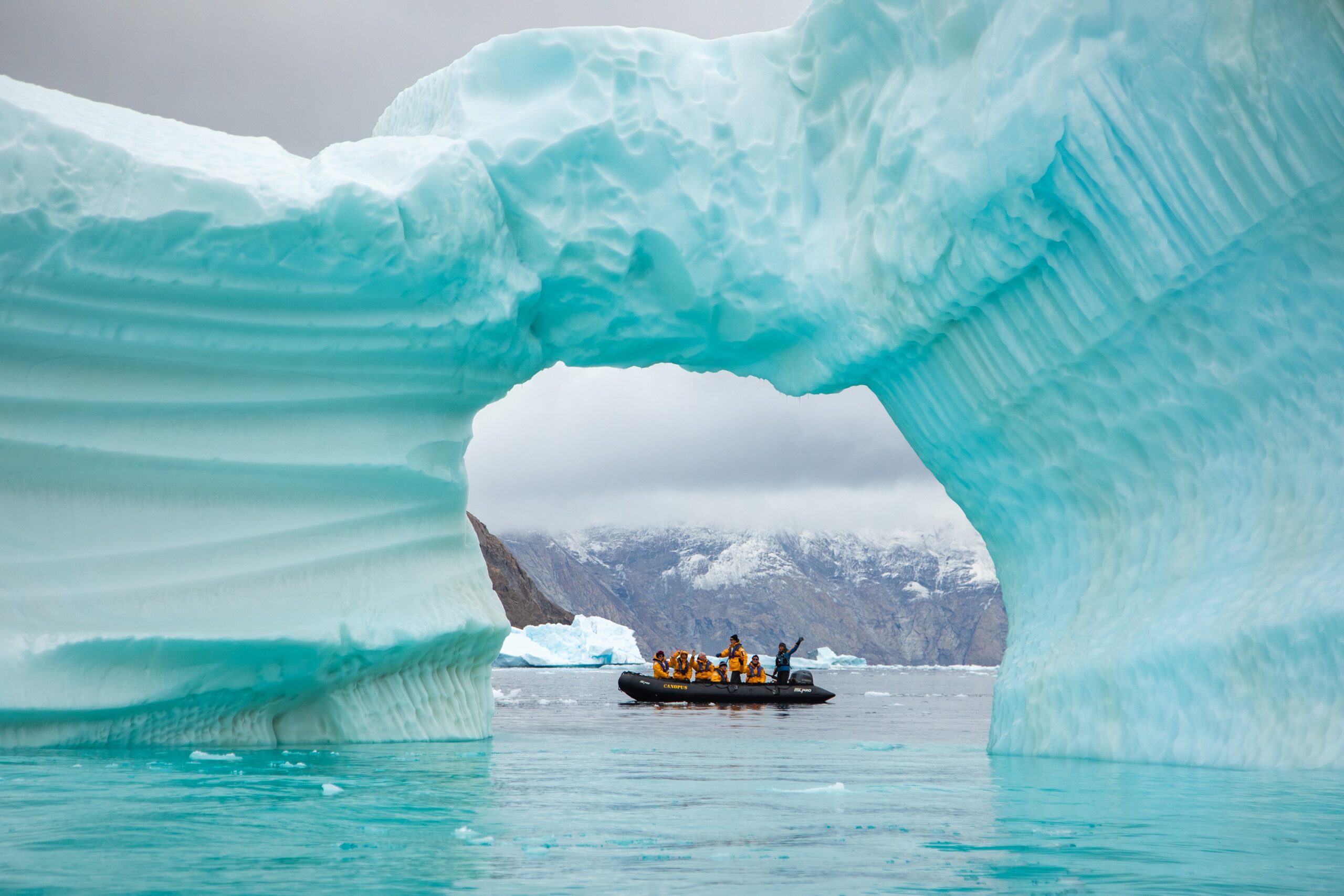
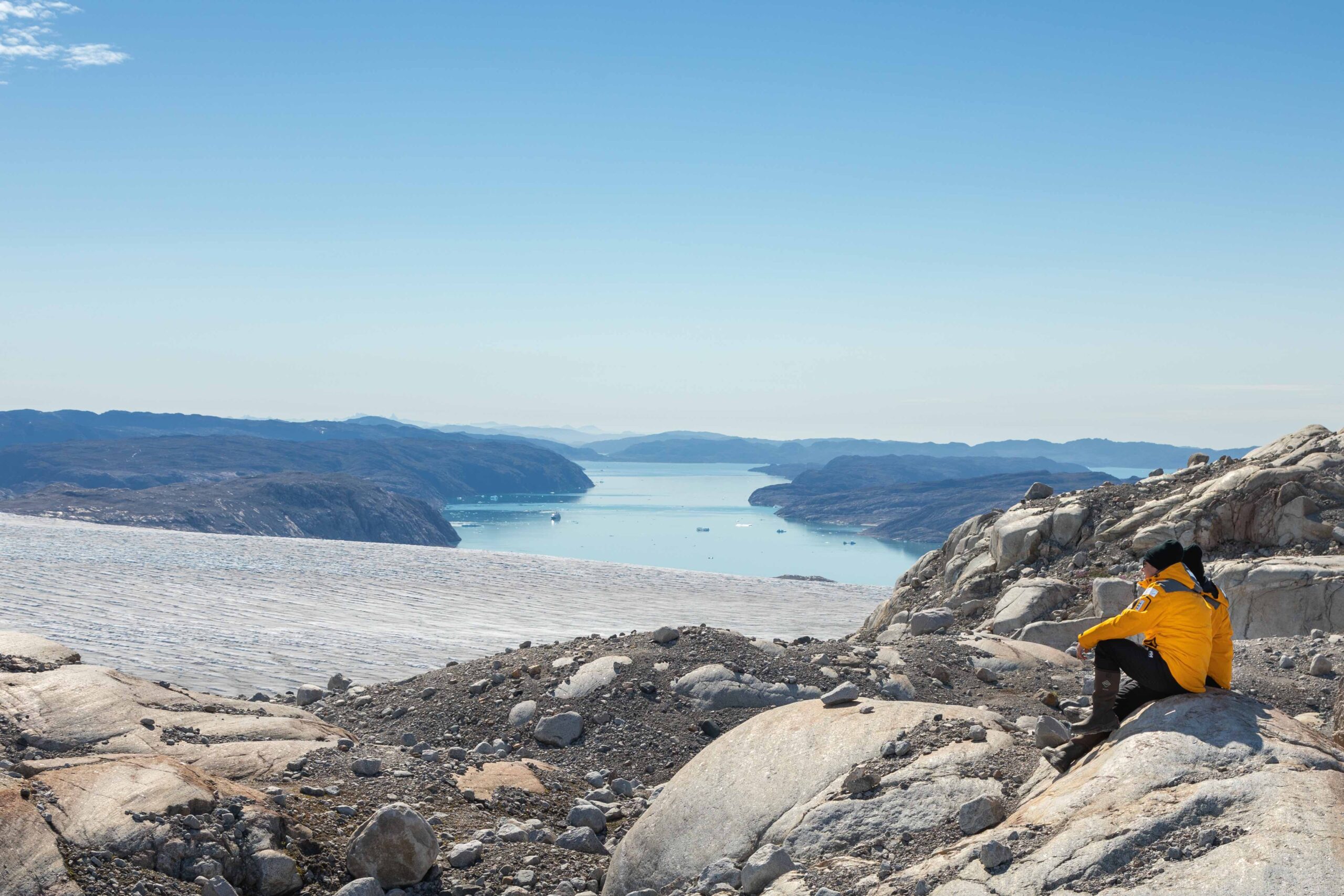
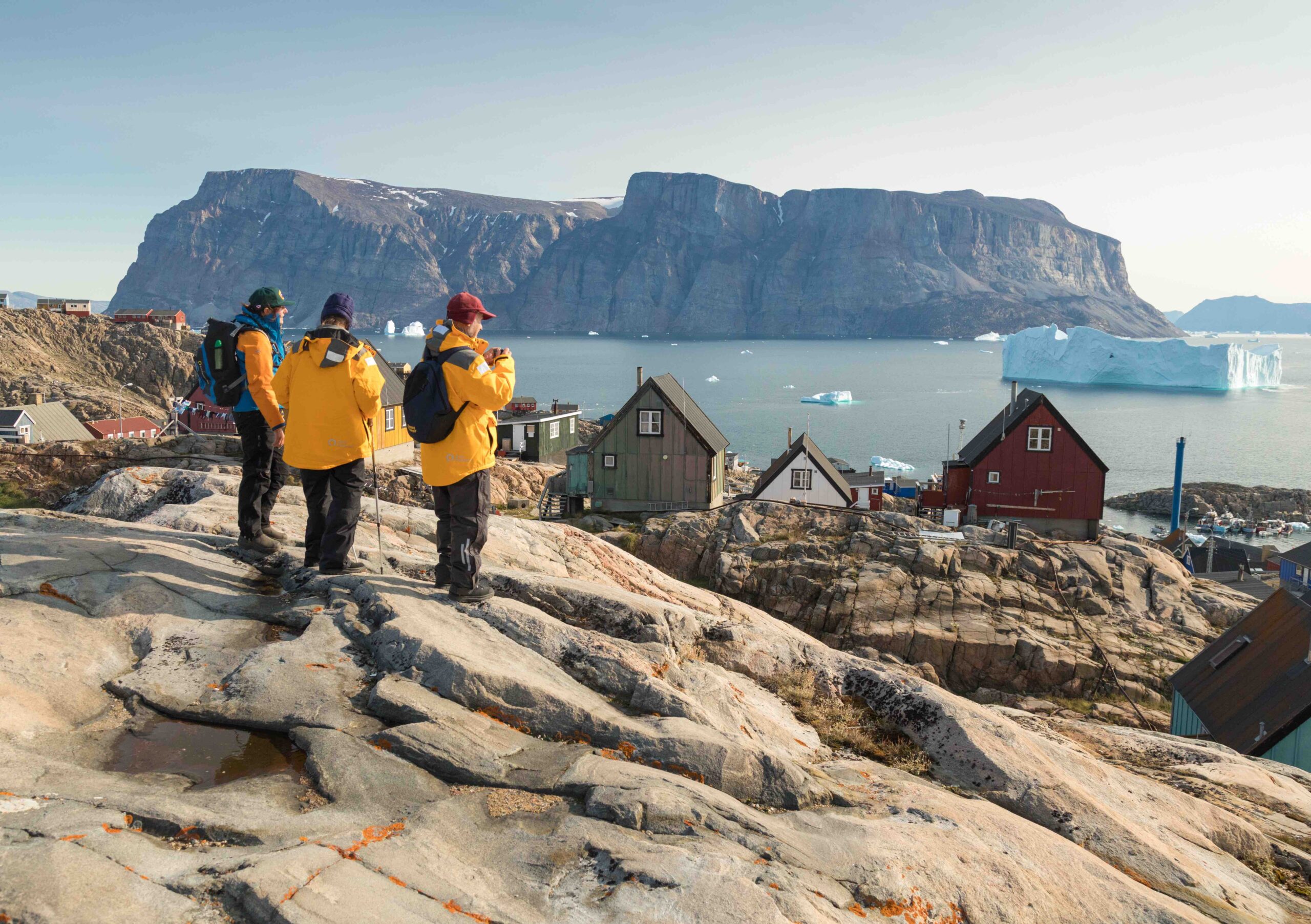
Your first day of off-ship excursions will introduce you to the Southwest Greenland region known as Bredefjord (Ikersuaq in Greenlandic), a network of bays, coves, islands and fjords surrounded by mountains. As always, weather and sea conditions determine the dayтАЩs activities. We hope to visit Qalerallit Sermia, which features three glacial faces descending from the Greenland Ice Sheet. With glaciers stretching toward the sea, you may also seeтАФ and hearтАФglacial runoff in the form of cascading streams or waterfalls. Set against the crackling of ice, the silence here is paradoxically loudтАФand hauntingly beautiful. The terrain, like much of Greenland, is uneven without defined trails, but many locations are suitable for hiking. Some guests may opt to charge uphill to gain an elevated perspective, while others choose to walk slowly and appreciate the landscape. Our team accommodates hikers of all levels of ability. We will experience rugged mountain landscapes and striking glacial scenery. Glaciers can be found in many bays and coves, and you will see icebergs of various shapes and sizes drift by. We may explore them more intimately by ZodiacтАФfrom a safe distance, of course.
fjord in Greenland
Day 5

Qassiarsuk

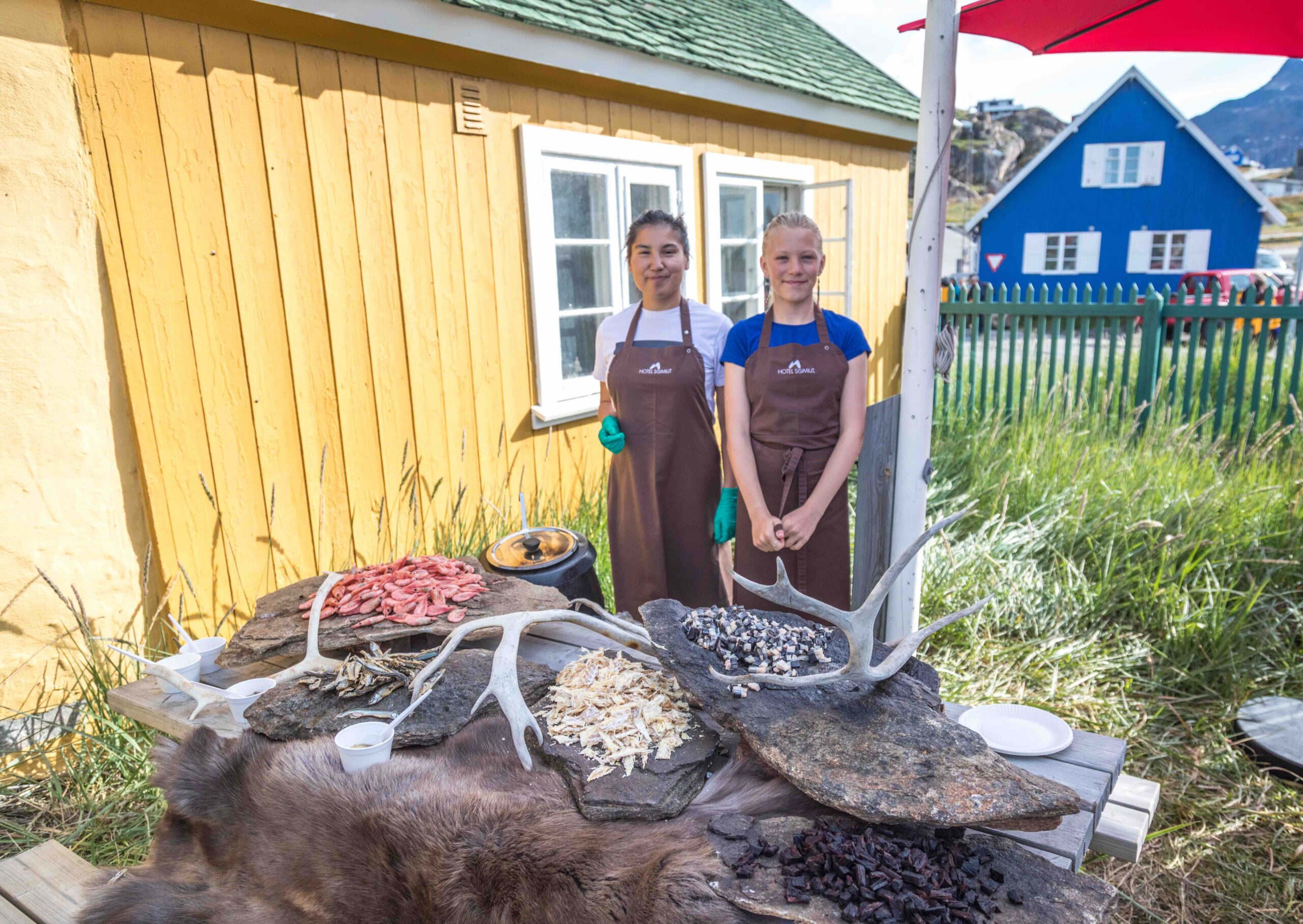
South Greenland is steeped in lore surrounding the famous Greenlandic Viking, Erik the Red, and the seemingly sudden disappearance of Norse settlements. ItтАЩs no surprise that many of our guests have come in the hopes of witnessing vestiges of this lost civilization. Today, weтАЩll get to walk in the footsteps of those long-gone Vikings. WeтАЩll visit Narsaq, on Tunulliarfik Fjord, where youтАЩll immediately notice the brightly colored homes that have been occupied for generations. Ranging from reds and greens to blues and yellows, many trimmed in bright white, the community stands out as particularly picturesque. Guided walks in and around Narsaq will include some of the oldest Norse settlement ruins in GreenlandтАФ adjacent to an active community of locals going about their day-to-day lives. We also hope to visit Qassiarsuk, home to Brattahl├н├░, the site of Erik the RedтАЩs original estate. Located in a surprisingly verdant part of South Greenland, the landscape is lush with vegetation and dotted with grazing sheep. ItтАЩs this fertile setting that drew Norse settlers here more than a thousand years ago, and today, the area offers a vivid picture of that distant past. Carefully restored with reconstructions of original Norse buildings, the site invites visitors to imagine daily life in this historic settlement. A small community of Greenlandic residents still lives in a place where ancient Norse traditions and modern Greenlandic culture thrive side by side.

Qassiarsuk is the newer, Greenlandic name for this small village. Brattahlid is the older, Norse name. Here we tour the foundation remains of the manor house of Erik the Red, who found Greenland after being banished from Iceland and Norway for murder. We will also visit the site of the first Christian church ever built in North America (physiographically speaking), see a recently unearthed Norse graveyard that contains remains of 144 Norse colonists, and have a chance to admire Hans LyngeтАЩs remarkable bronze sculpture of Erik the Red.
Day 6

Tasermiut Fjord, Klostertal

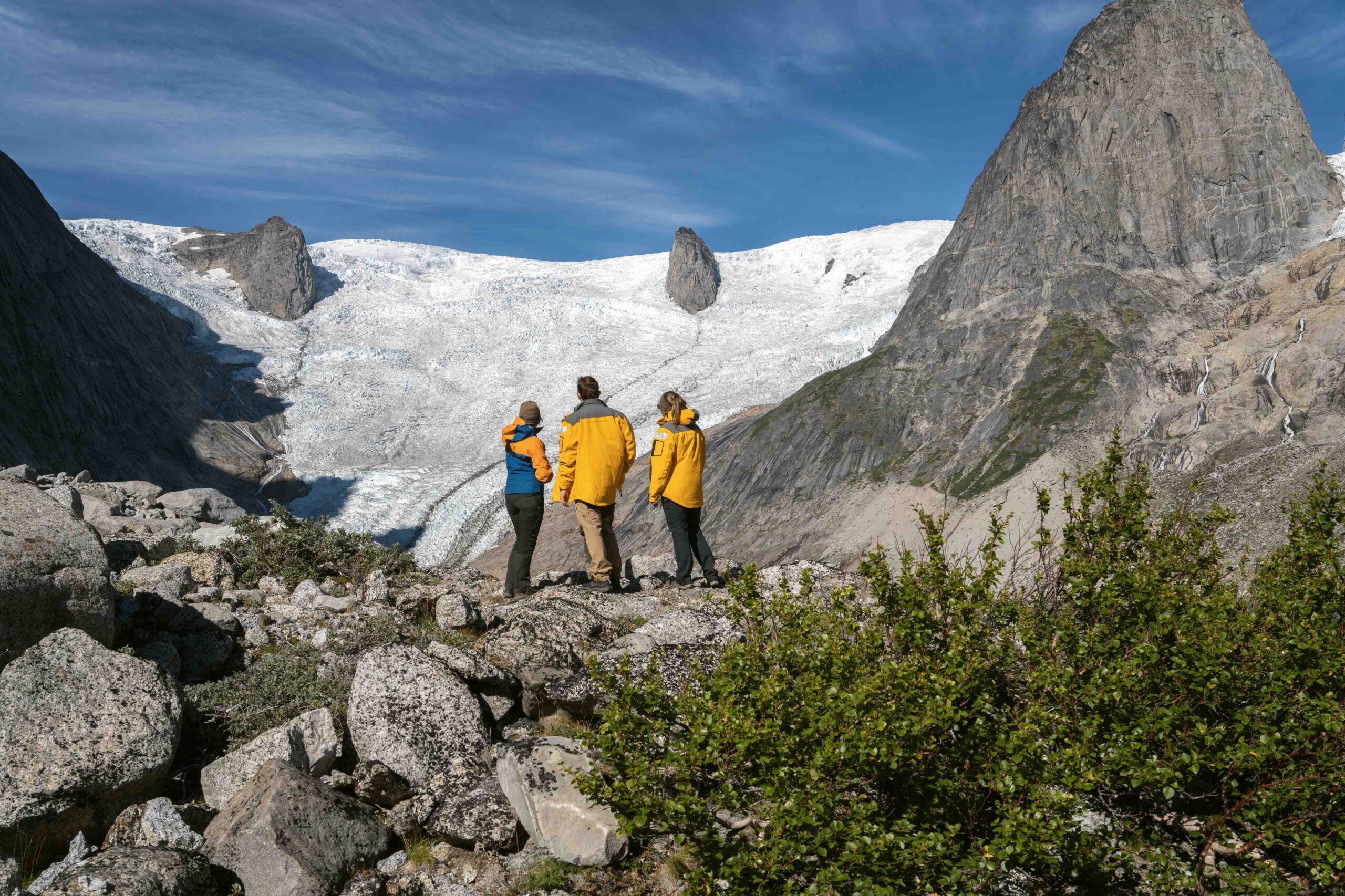
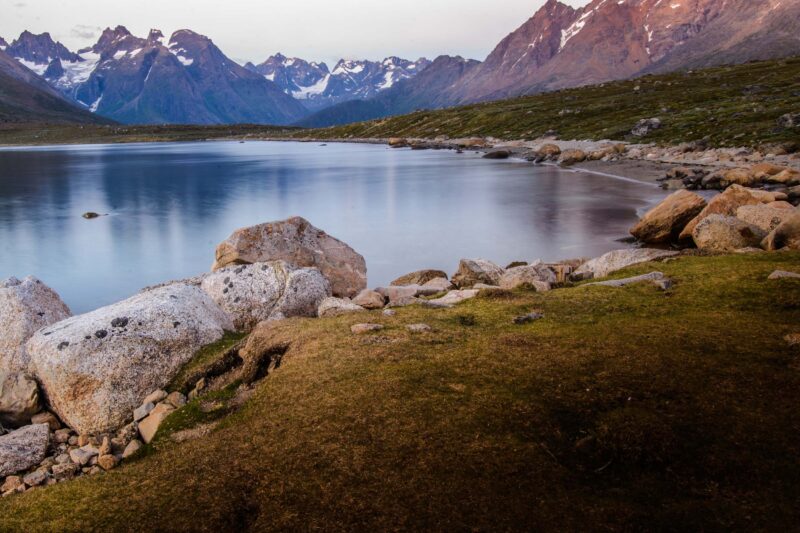
The deep fjord of Tasermiut is striking in its stark natural beauty. Steep mountains rise abruptly from the sea. Sharp peaks and ridgelines dominate the skyline, while the valley floors and lower slopes support a surprisingly diverse mix of vegetationтАФgrasses, wildflowers, lichens and hardy dwarf trees. Signs of glacial retreat are clearly visible: once ice-filled valleys now channel milky blue rivers that fan out into small deltas and tidal f lats as they meet the fjord. The intention here is to explore by foot, with hiking routes suitable for guests with a range of interests and abilities. Some may choose a faster-paced trek to reach deeper into the wilderness, while others may take their time, pausing to admire the incredible landscape. As in previous outings, the ground will be unevenтАФ rocky in places, with patches of moss and low vegetation. Our route will depend on conditions, but possible destinations include Klosterdalen and Qoorormiut KangilliitтАФboth known for their dramatic mountain backdrops.
Prince Christian Sound
Day 7

Prince Christian Sound

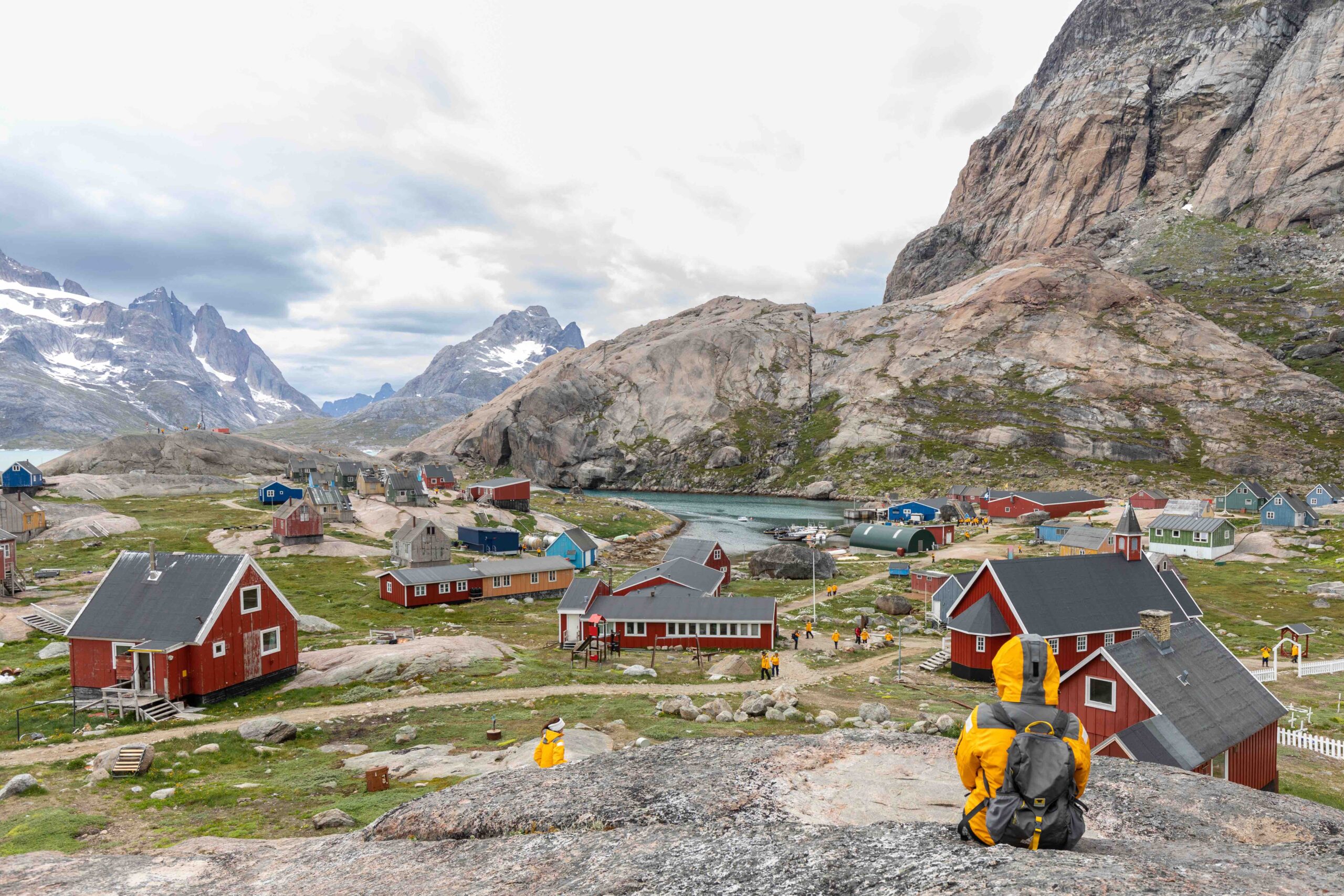
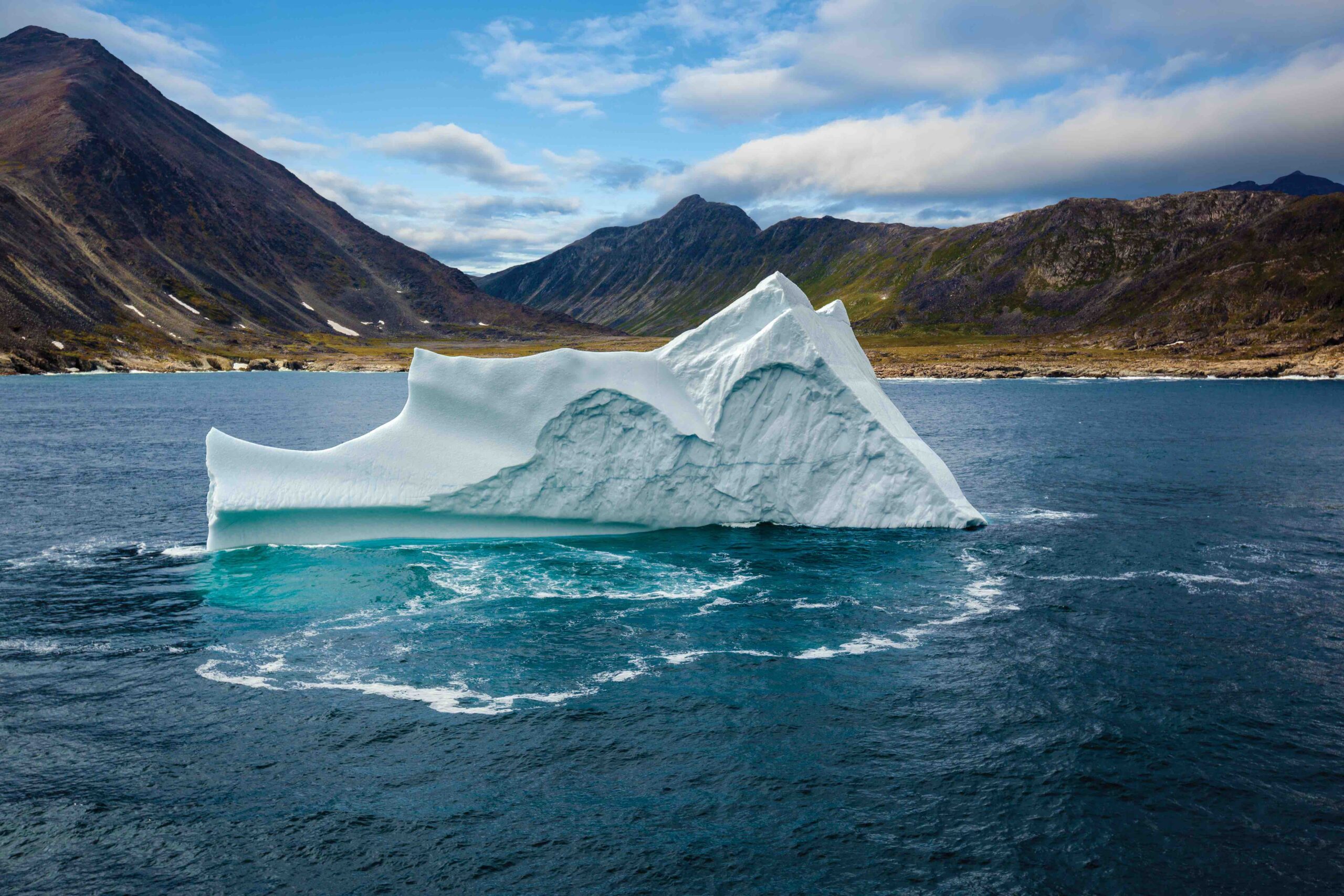
The epic scenery continues as we make our way toward Prins Christian Sund, which is synonymous with dynamic ice conditions. This narrow body of water is wedged between steep mountain ranges to the north and south, and it can serve as a corridor for both glacial and sea ice. Intimacy and grandeur apply here, as the narrowest section of the body of water is roughly 400 meters (1,300 feet) across. High above, on both sides of the fjord, are mountain summits that reach between 1,300 (4,200 feet) and 1,700 meters (5,500 feet) above sea level. In other words, these mountains canтАФand doтАФrise nearly vertically. We may explore the glacial ice by ship and Zodiac. During the summer glacial runoff, and particularly after rains, this region is home to numerous waterfalls, cascading down seemingly vertical mountain sides. To feel the true scale of nature, you need only sail through Prins Christian Sund. If conditions allow, we may also visit the small village of Aappilattoq, home to fewer than 100 residents. Similar to other coastal Greenlandic communities, this small village is known for colorfully painted homes against a backdrop of cliffs and mountainsтАФand icebergs, which regularly drift by the small community, and are often seen inside the inner harbor. ThereтАЩs something almost mythical about Aappilattoq, where the inhabitants, many of them fishermen, live alongside drifting icebergs and powerful mountain ranges.

The transit through the Sound is one of this voyageтАЩs highlights. Connecting the Labrador Sea with the Irminger Seat, Prince Christian Sound or тАЬPrins Christian SundтАЭ in Danish is named after Prince (later King) Christian VII (1749-1808). 100 km (60 miles ), long and at times just 500 m (1500 ft) wide, this majestic and spectacular fiord throws you back into a Viking era тАУ flanked by soaring snow-topped mountains, rock-strewn cliffs and rolling hills, it is as if time has stood still and one easily forgets that this is the 21st century. As you marvel at the sheer size of the mountains that surround you, with the Arctic waters lapping deceptively at the hull, revel in the silence enveloping you. Icebergs float serenely by, carrying with them the ages of time. Be sure to wear warm clothing as this is one spectacle that you do not want to miss.

Qeqertarsuaq
Day 8

Uunartoq Qeqertaq

In summer, the valleys and foothills of Uunartoq Fjord live up to the name Greenland. A region of mountains and stunning geology, Uunartoq also offers a diverse range of plant life. Pockets of grasses, mosses, lichens, and flowering plants, including delicate orchids, grow here, adding splashes of color to this otherwise mountainous, glacial landscape. The hiking routes are stunning, particularly for those fascinated by how plants and wildlife adapt to life in the Arctic and sub-Arctic. You can choose from hikes of varying difficultyтАФfrom longer treks with gentle elevation gains to slower, more contemplative walks that allow you to stop and smell the flowers. The adjacent waters are home to icebergs and marine mammals. Shifting shades of white and glacial blue ice drift with the currents, scattering uniquely shaped ice forms across the landscape. You may spot marine mammals, such as seals and various species of whales. Minke and humpback whales are the most common in Uunartoq Fjord, though we occasionally see fin whales, as well. Uunartoq Fjord is also known for its geothermal hot springs, and depending on conditions, it may be possible to visit some of these natural hot springs during our visit.

Uunartoq is a small island in South Greenland a short distance east of what once was considered the largest settlement in Greenland. The island has hot springs that were renowned as far back as the days of the Norse for their healing effects. Three naturally heated streams have been channeled to flow into a knee-deep and stone-lined pool. While one unwinds by soaking in the steaming waters, one can watch icebergs that either clog the fjord to the north or come floating by.
Hvalsey
Day 9

Hvalsey

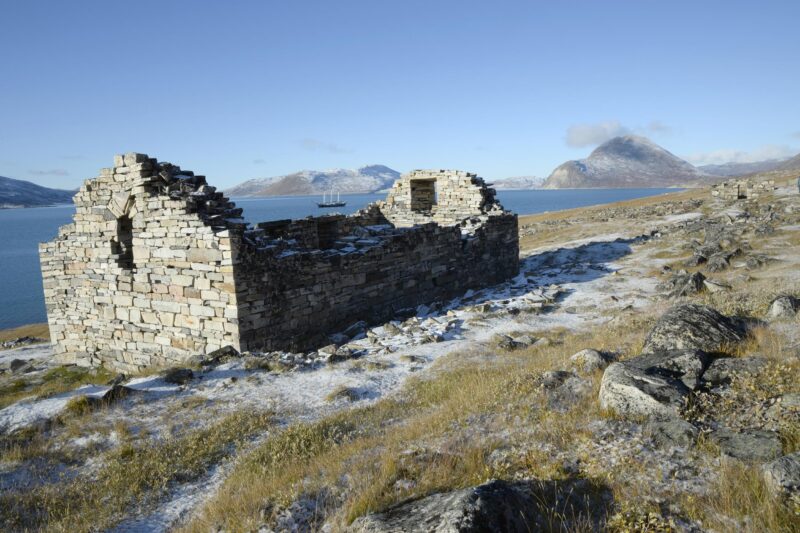
The four walls and foundation of the stillstanding 14th-century Hvalsey church are considered the most iconic of all Norse ruins in Greenland. For history buffs, this site is akin to a pilgrimage. While we will have encountered Norse ruins earlier in the voyage and visited reconstructions of long-lost villages, Hvalsey evokes a surprisingly complex range of emotionsтАФ haunting, reverent, and deeply curious. Standing almost alone in an otherwise wild landscape, the Hvalsey church prompts one to wonder how civilizations can be forgotten for centuries, and then suddenly remembered. The rolling terrain of this well-chosen site, a mix of rock and vegetation, will appeal to hikers in the group.

Northeast of Qaqortoq and at the end of a fjord, Hvalsey is one of the best examples of South GreenlandтАЩs many scattered ruins from the Norse period. Today the area is used for sheep-grazing, but until the 15th century the settlement at Hvalsey, and specifically HvalseyтАЩs church, played an important part. Christianity had spread its influence throughout Europe and eventually had reached remote Greenland, where it established itself in the country in 1000 AD. Hvalsey Church was built in the 14th century and is the best preserved of the churches in Greenland from that period. Apart from the church walls, historical ruins from the time of the Norse are just a few meters away.

nuuk
Days 10-11

Nuuk (Godthaab)

While heading to Nuuk, relax and enjoy yourself as we cruise along the coast of Greenland, or continue your Arctic education by attending another expert-led presentation. Weather-permitting, there may be an opportunity for one last shore excursion near Ivittuut, a small peninsula on the mainland. Today is also your last chance to take advantage of UltramarineтАЩs beautifully-designed Tundra Spa & Sauna.

Nuuk, meaning тАЬthe capeтАЭ, was GreenlandтАЩs first town (1728). Started as a fort and later mission and trading post some 240 kilometers south of the Arctic Circle, it is the current capital. Almost 30% of GreenlandтАЩs population lives in the town. Not only does Nuuk have great natural beauty in its vicinity, but there are Inuit ruins, Hans EgedeтАЩs home, the parliament, and the Church of our Saviour as well. The Greenlandic National Museum has an outstanding collection of Greenlandic traditional dresses, as well as the famous Qilakitsoq mummies. The Katuaq Cultural CenterтАЩs building was inspired by the undulating Northern Lights and can house 10% of NuukтАЩs inhabitants.

city view of Reykjavik
Day 12

Reykjav├нk

After breakfast at your included hotel, make your way independently to Keflavik international for your onward f light, or continue your independent explorations of Reykjavik at your leisure.

Sprawling Reykjav├нk, the nation's nerve center and government seat, is home to half the island's population. On a bay overlooked by proud Mt. Esja (pronounced eh-shyuh), with its ever-changing hues, Reykjav├нk presents a colorful sight, its concrete houses painted in light colors and topped by vibrant red, blue, and green roofs. In contrast to the almost treeless countryside, Reykjav├нk has many tall, native birches, rowans, and willows, as well as imported aspen, pines, and spruces.Reykjav├нk's name comes from the Icelandic words for smoke, reykur, and bay, v├нk. In AD 874, Norseman Ing├│lfur Arnarson saw Iceland rising out of the misty sea and came ashore at a bay eerily shrouded with plumes of steam from nearby hot springs. Today most of the houses in Reykjav├нk are heated by near-boiling water from the hot springs. Natural heating avoids air pollution; there's no smoke around. You may notice, however, that the hot water brings a slight sulfur smell to the bathroom.Prices are easily on a par with other major European cities. A practical option is to purchase a Reykjav├нk City Card at the Tourist Information Center or at the Reykjav├нk Youth Hostel. This card permits unlimited bus usage and admission to any of the city's seven pools, the Family Park and Zoo, and city museums. The cards are valid for one (ISK 3,300), two (ISK 4,400), or three days (ISK 4,900), and they pay for themselves after three or four uses a day. Even lacking the City Card, paying admission (ISK 500, or ISK 250 for seniors and people with disabilities) to one of the city art museums (Hafnarh├║s, Kjarvalssta├░ir, or ├Бsmundarsafn) gets you free same-day admission to the other two.

Map

Need advice?

It's good to talk to people who have been there.

No hard sell. Just excellent advice.
And Penguins.

Choose Your Date
Loading new tour date...
Next Step - Choose Your Cabin

The Ship

Introducing
Ultramarine is one of the most recent additions to polar expedition cruising. First launched in 2021, when you step onboard, it is noticeable that this ship was purpose-built from the ground up as a go-anywhere expedition cruise ship. A wrap-around deck provides unparalleled views, and the ship's four Zodiac embarkation points make joining an excursion a breeze.

Choose Your Cabin

Deck Plan

ultramarine deck plan deck 2

See Similar Cruises

Request Reservation

Cabin Name

For a no obligation quote please fill in your details.
Enquire

Cabin Name

Please fill in your details to make an enquiry.