



Crossing 66º South Latitude
Ushuaia - Ushuaia



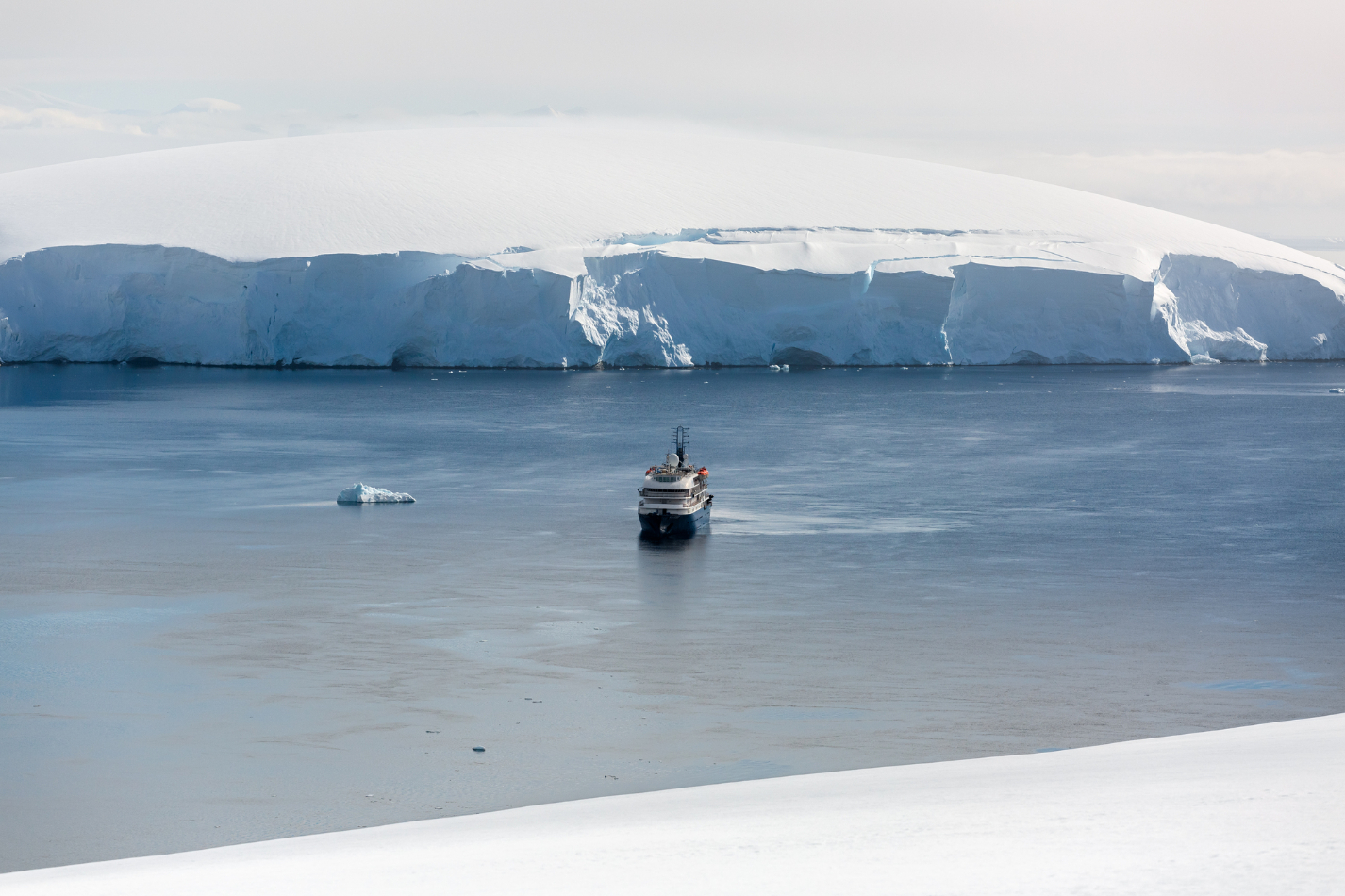
Join us on an exciting 15-day “Antarctic Circle: Wildest Antarctica” voyage from Ushuaia, Argentina. Aboard the small ship M/V Sea Spirit, you’ll explore the Antarctic Peninsula, South Shetland Islands and the enigmatic Antarctic Circle, with unparalleled wildlife sightings and polar landscapes.
In Ushuaia, the world’s southernmost city, you’ll have time to get to know the town before boarding the M/V Sea Spirit. As the ship crosses the Drake Passage, you’ll reach the Antarctic Convergence, where the ocean awakens with diverse marine life and seabirds. The ship’s stabilizers make the crossing comfortable so you can fully enjoy the journey.
In the South Shetland Islands and Antarctic Peninsula, daily Zodiac excursions will get you up close to towering glaciers, majestic icebergs and bustling penguin colonies. Special activities like sea kayaking and camping on the ice are for the adventurous. The highlight of the voyage is crossing the Antarctic Circle into some of the continent’s most remote and untouched areas.
Throughout the expedition, expert guides will give you insights into the region’s ecology, geology and history so you can better appreciate this special place. The M/V Sea Spirit offers a luxurious and cosy setting so you can be comfortable as you explore one of the most remote places on Earth. Return to Ushuaia with a newfound appreciation for Antarctica’s sheer beauty and wonder.
Activities

Camping

Hiking

Lectures

Polar Plunge

Sea Kayaking

Wildlife Watching

Zodiac Cruises
Itinerary
Days 1-2
Ushuaia
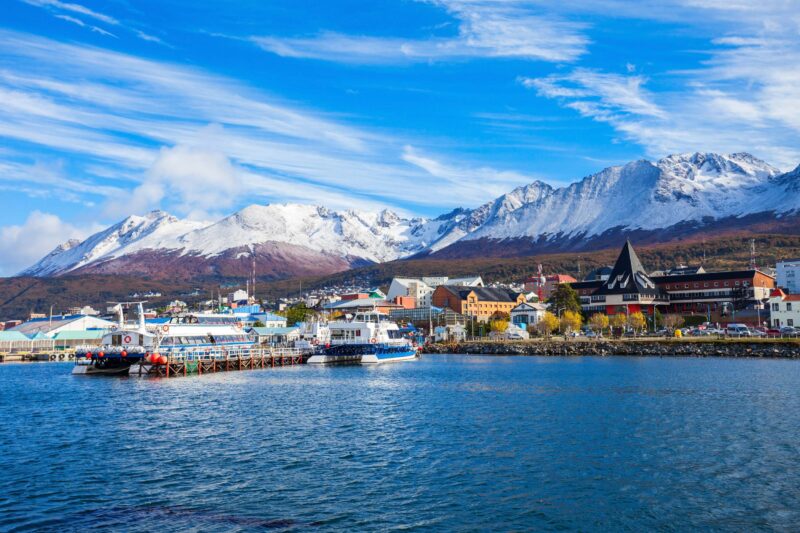
Welcome to Ushuaia, the world’s southernmost city and starting point of our Antarctic expedition! Upon your arrival at the airport, you will be greeted by our staff and transferred to a quality hotel, which has been arranged by us and is included in the price of the itinerary. For the rest of the day, you are free to explore this vibrant port city and adventure hub. For an introduction to local history and wildlife, the interesting Museo del Fin del Mundo is worth a visit. If you have time to spare, a variety of nature activities can be arranged to suit all interests and fitness levels, from hiking in nearby Tierra del Fuego National Park to wildlife viewing in the Beagle Channel. For dinner, Ushuaia offers a wide range of restaurants featuring Patagonian lamb and delectable Fuegian seafood.
At 55 degrees latitude south, Ushuaia (pronounced oo-swy-ah) is closer to the South Pole than to Argentina's northern border with Bolivia. It is the capital and tourism base for Tierra del Fuego, the island at the southernmost tip of Argentina.Although its stark physical beauty is striking, Tierra del Fuego's historical allure is based more on its mythical past than on rugged reality. The island was inhabited for 6,000 years by Yámana, Haush, Selk'nam, and Alakaluf Indians. But in 1902 Argentina, eager to populate Patagonia to bolster its territorial claims, moved to initiate an Ushuaian penal colony, establishing the permanent settlement of its most southern territories and, by implication, everything in between.When the prison closed in 1947, Ushuaia had a population of about 3,000, made up mainly of former inmates and prison staff. Today the Indians of Darwin's "missing link" theory are long gone—wiped out by diseases brought by settlers and by indifference to their plight—and the 60,000 residents of Ushuaia are hitching their star to tourism.The city rightly (if perhaps too loudly) promotes itself as the southernmost city in the world (Puerto Williams, a few miles south on the Chilean side of the Beagle Channel, is a small town). You can make your way to the tourism office to get your clichéd, but oh-so-necessary, "Southernmost City in the World" passport stamp. Ushuaia feels like a frontier boomtown, at heart still a rugged, weather-beaten fishing village, but exhibiting the frayed edges of a city that quadrupled in size in the '70s and '80s and just keeps growing. Unpaved portions of Ruta 3, the last stretch of the Pan-American Highway, which connects Alaska to Tierra del Fuego, are finally being paved. The summer months (December through March) draw more than 120,000 visitors, and dozens of cruise ships. The city is trying to extend those visits with events like March's Marathon at the End of the World and by increasing the gamut of winter activities buoyed by the excellent snow conditions.A terrific trail winds through the town up to the Martial Glacier, where a ski lift can help cut down a steep kilometer of your journey. The chaotic and contradictory urban landscape includes a handful of luxury hotels amid the concrete of public housing projects. Scores of "sled houses" (wooden shacks) sit precariously on upright piers, ready for speedy displacement to a different site. But there are also many small, picturesque homes with tiny, carefully tended gardens. Many of the newer homes are built in a Swiss-chalet style, reinforcing the idea that this is a town into which tourism has breathed new life. At the same time, the weather-worn pastel colors that dominate the town's landscape remind you that Ushuaia was once just a tiny fishing village, snuggled at the end of the Earth.As you stand on the banks of the Canal Beagle (Beagle Channel) near Ushuaia, the spirit of the farthest corner of the world takes hold. What stands out is the light: at sundown the landscape is cast in a subdued, sensual tone; everything feels closer, softer, and more human in dimension despite the vastness of the setting. The snowcapped mountains reflect the setting sun back onto a stream rolling into the channel, as nearby peaks echo their image—on a windless day—in the still waters.Above the city rise the last mountains of the Andean Cordillera, and just south and west of Ushuaia they finally vanish into the often-stormy sea. Snow whitens the peaks well into summer. Nature is the principal attraction here, with trekking, fishing, horseback riding, wildlife spotting, and sailing among the most rewarding activities, especially in the Parque Nacional Tierra del Fuego (Tierra del Fuego National Park).
Days 3-4
Drake Passage Seas
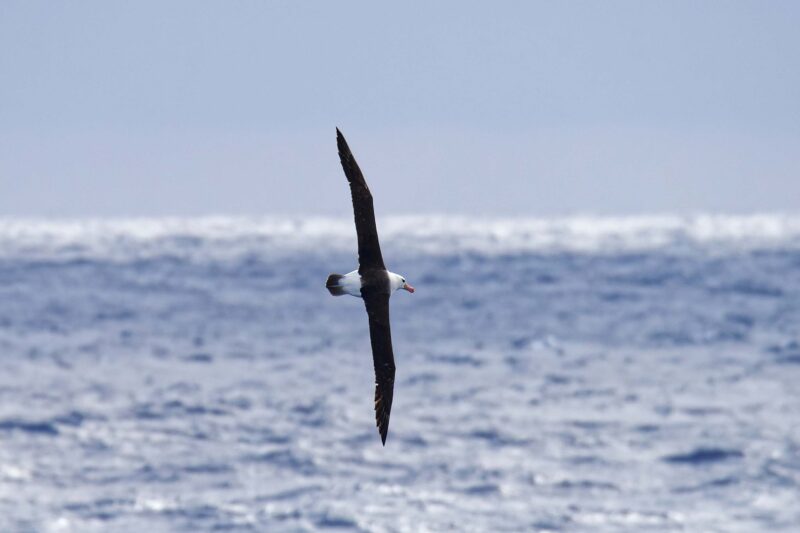
After passing the islands of Tierra del Fuego, we turn south to begin our crossing of the Drake Passage. We watch for humpback and fin whales along the way. The majestic wandering albatross and other graceful subantarctic seabirds are common in these waters and can readily be viewed from panoramic open decks and balconies. We also cross the Antarctic Convergence, the biological boundary of the Southern Ocean. The ship’s stabilizing fins provide comfort in the event of rough seas. Briefings, bio-security procedures and presentations by our lecture staff prepare you for our arrival in Antarctica. We hope to arrive in the South Shetland Islands on the evening of our second day at sea.

Days 5-12
South Shetland Islands
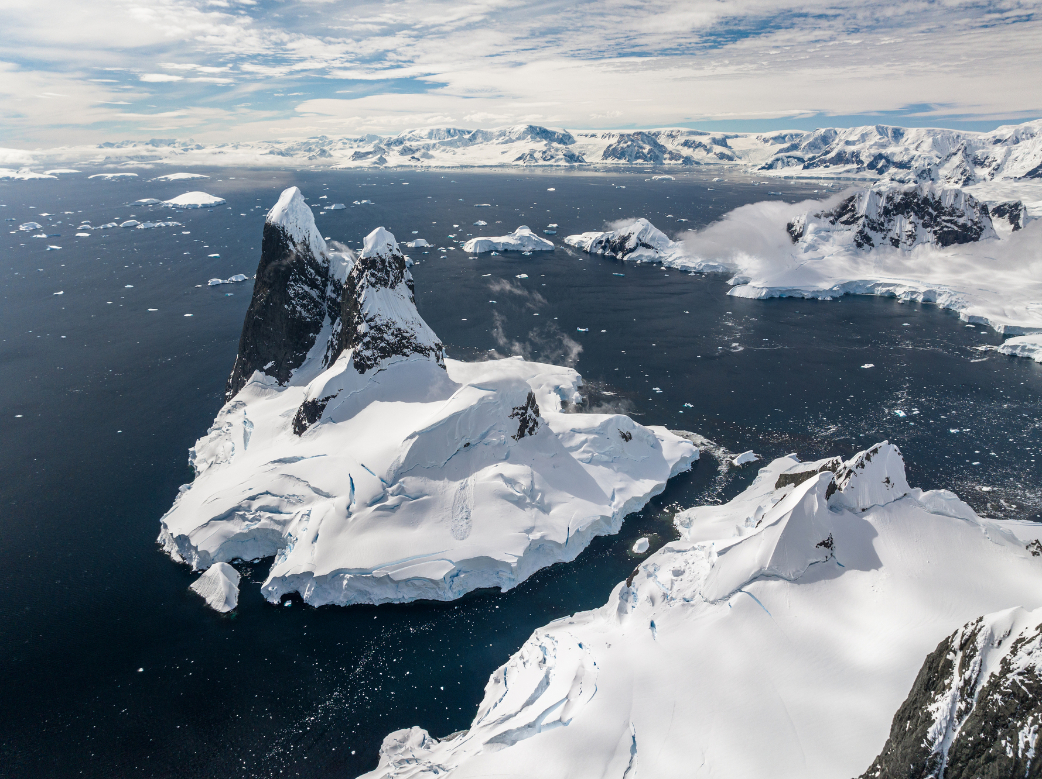
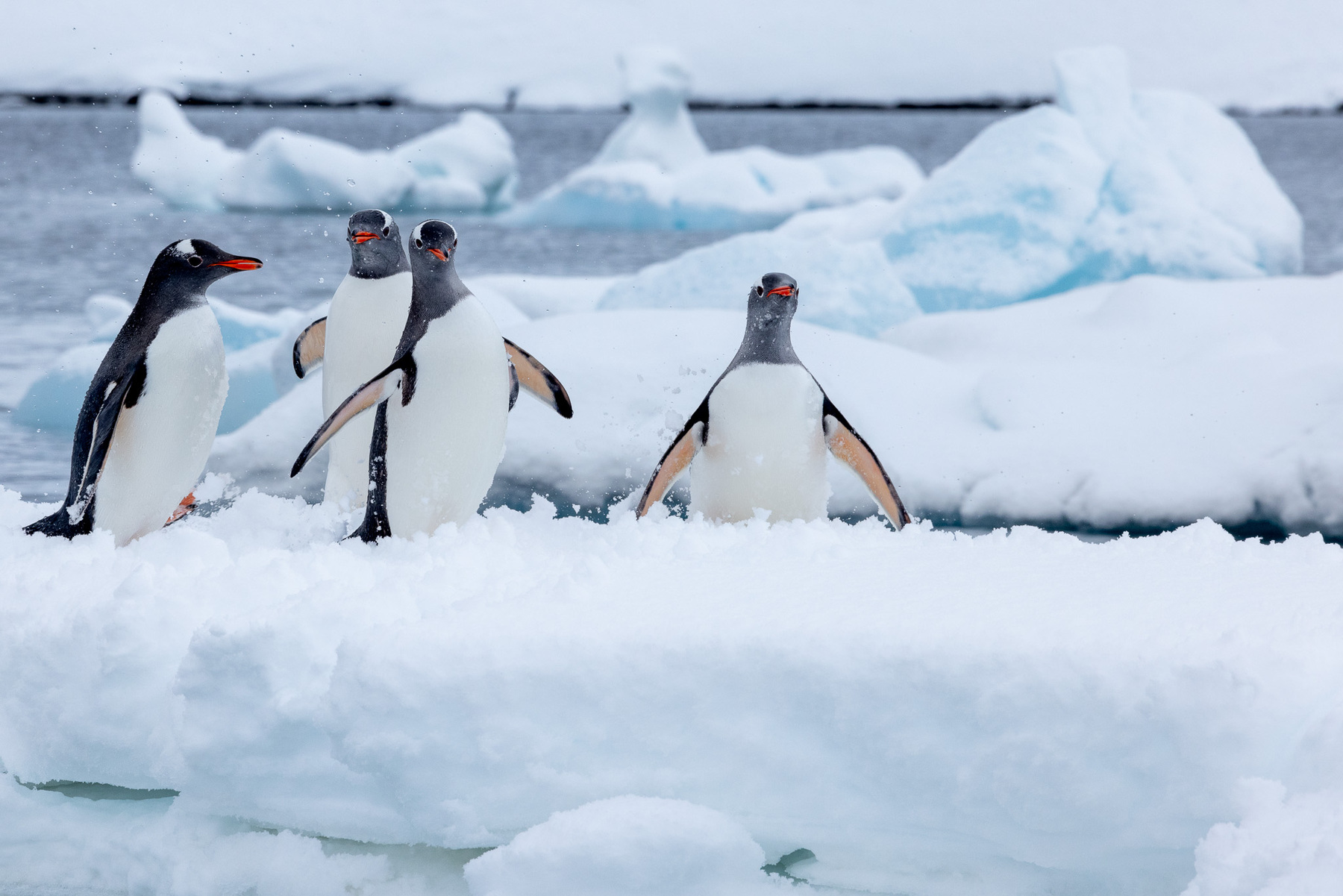
Within the next days, we undertake an in-depth exploration of the South Shetland Islands and the Antarctic Peninsula. This region contains some of the world’s most impressive scenery and the best wildlife viewing in Antarctica. Sheltered bays and channels sparkle with ice and reflect towering mountain peaks coated in permanent snow and immense glaciers. Icebergs of every size and description complete an image of incomparable beauty. Waters rich with krill are home to huge numbers of marine mammals and seabirds. The whole area is alive with penguins foraging at sea and forming large rookeries at special places on land. Here we also find Antarctic research bases of various nationalities. The South Shetland Islands are the northernmost islands in Antarctica and will likely be our first area of exploration. This wildly beautiful island chain contains many landing sites with historical significance and abundant wildlife. We will also explore the supremely picturesque Gerlache Strait area of the Antarctic Peninsula, a pristine wilderness of spectacular white landscapes, colossal icebergs, obliging marine mammals and bustling penguin colonies. We plan to pass through the famous Lemaire Channel, also known as “Kodak Gap” because of the photogenic way the narrow channel reflects the image of sheer snowy mountains. On this special voyage, we have additional days devoted to pushing even farther south in our attempt to cross the Antarctic Circle. The sublime icescapes in Crystal Sound and beyond are particularly austere, the weather is especially wild, and the waters are full of constantly shifting ice. Very few people have ventured this far south. This is a true expedition. Throughout the islands and on the mainland, we find large colonies of gentoo, chinstrap and Adélie penguins, sometimes side by side. It is a dramatic time at the colonies. While some parents remain at the nest to guard against skua attack, others go fishing in seas patrolled by predatory leopard seals and killer whales. Meanwhile, fluffy chicks are starting to explore away from their nests. Also at this time, humpback and minke whales have arrived in great numbers and the feeding frenzy in is full swing. Crabeater and Weddell seals abound in these highly productive waters. In this rugged yet accessible environment, superb wildlife viewing is best complemented by active adventure. For sea kayakers, the wildlife-rich waters of Antarctica offer many chances to paddle with seals and penguins in some of the world’s most scenic waterways. To make the most of your time on the White Continent, you can also spend a night camping ashore, surrounded by untamed Antarctic nature. This is expedition cruising at its most authentic. Our precise route and exploration opportunities will be shaped by weather and ice. Our experienced captain and expedition leader will continually adjust plans to take maximum advantage of the conditions in this challenging polar environment.
Some 770 kilometers (478 miles) south of Cape Horn, the South Shetland Islands are usually the first land seen in Antarctica. Separated from the Antarctic Peninsula by the Bransfield Strait, nine major islands make up the group. The region was the first to be exploited by sealers in the early 19th century, and because of its proximity to South America, it still is the most visited by scientists and tourists. Chinstrap, Adelie, Gentoo and Macaroni Penguins all breed here. In addition, because it is the warmest part of the continent, large moss beds as well as orange, black, grey and green lichens grow –even hair grass and pearlwort manage to survive. Leopard seals, Weddell seals, crabeater seals, Southern elephant seals and Antarctic fur seals can be seen in the water and on the beaches.
Days 13-14
Drake Passage Seas
It is now time to head back across the Drake Passage toward South America, but the adventure is not quite over. Seabirds are our constant companions and there is always the possibility of whale encounters in these wild waters. This is also the time for festivities such as the Captain’s Farewell Cocktail and the end-of-voyage slideshow. Finally, as we enter the calm Beagle Channel, we enjoy a night of smooth sailing toward Ushuaia.
Day 15
Ushuaia
After yet another delicious breakfast on board, we bid you a fond farewell in Ushuaia. We provide a group transfer to the airport or to the city center if you wish to spend more time here. As you look back on your wonderful experience in Antarctica, you may already be looking forward to your next polar adventure!
At 55 degrees latitude south, Ushuaia (pronounced oo-swy-ah) is closer to the South Pole than to Argentina's northern border with Bolivia. It is the capital and tourism base for Tierra del Fuego, the island at the southernmost tip of Argentina.Although its stark physical beauty is striking, Tierra del Fuego's historical allure is based more on its mythical past than on rugged reality. The island was inhabited for 6,000 years by Yámana, Haush, Selk'nam, and Alakaluf Indians. But in 1902 Argentina, eager to populate Patagonia to bolster its territorial claims, moved to initiate an Ushuaian penal colony, establishing the permanent settlement of its most southern territories and, by implication, everything in between.When the prison closed in 1947, Ushuaia had a population of about 3,000, made up mainly of former inmates and prison staff. Today the Indians of Darwin's "missing link" theory are long gone—wiped out by diseases brought by settlers and by indifference to their plight—and the 60,000 residents of Ushuaia are hitching their star to tourism.The city rightly (if perhaps too loudly) promotes itself as the southernmost city in the world (Puerto Williams, a few miles south on the Chilean side of the Beagle Channel, is a small town). You can make your way to the tourism office to get your clichéd, but oh-so-necessary, "Southernmost City in the World" passport stamp. Ushuaia feels like a frontier boomtown, at heart still a rugged, weather-beaten fishing village, but exhibiting the frayed edges of a city that quadrupled in size in the '70s and '80s and just keeps growing. Unpaved portions of Ruta 3, the last stretch of the Pan-American Highway, which connects Alaska to Tierra del Fuego, are finally being paved. The summer months (December through March) draw more than 120,000 visitors, and dozens of cruise ships. The city is trying to extend those visits with events like March's Marathon at the End of the World and by increasing the gamut of winter activities buoyed by the excellent snow conditions.A terrific trail winds through the town up to the Martial Glacier, where a ski lift can help cut down a steep kilometer of your journey. The chaotic and contradictory urban landscape includes a handful of luxury hotels amid the concrete of public housing projects. Scores of "sled houses" (wooden shacks) sit precariously on upright piers, ready for speedy displacement to a different site. But there are also many small, picturesque homes with tiny, carefully tended gardens. Many of the newer homes are built in a Swiss-chalet style, reinforcing the idea that this is a town into which tourism has breathed new life. At the same time, the weather-worn pastel colors that dominate the town's landscape remind you that Ushuaia was once just a tiny fishing village, snuggled at the end of the Earth.As you stand on the banks of the Canal Beagle (Beagle Channel) near Ushuaia, the spirit of the farthest corner of the world takes hold. What stands out is the light: at sundown the landscape is cast in a subdued, sensual tone; everything feels closer, softer, and more human in dimension despite the vastness of the setting. The snowcapped mountains reflect the setting sun back onto a stream rolling into the channel, as nearby peaks echo their image—on a windless day—in the still waters.Above the city rise the last mountains of the Andean Cordillera, and just south and west of Ushuaia they finally vanish into the often-stormy sea. Snow whitens the peaks well into summer. Nature is the principal attraction here, with trekking, fishing, horseback riding, wildlife spotting, and sailing among the most rewarding activities, especially in the Parque Nacional Tierra del Fuego (Tierra del Fuego National Park).
Map
Need advice?
No hard sell. Just excellent advice.
And Penguins.
- Guaranteed Best Operator Price
- 100% Financial Protection
- Free Travel Advice and Support
The Ship


Choose Your Cabin
Deck Plan


See Similar Cruises

Request Reservation
Cabin Name
For a no obligation quote please fill in your details.