Experience the wilderness of Tongass National Forest with your knowledgeable Expedition Team.
Witness nature’s power first-hand with three days of glacier exploration in our small expedition boats.
Learn about Łingít and Kwakwaka’wakw culture from the Indigenous villages while visiting native communities in Alaska and British Columbia.
Wild Alaskan adventure
Sail from Seward to Vancouver on this expedition cruise through the southeast region of Alaska. Famed for its incredible scenery, our route takes us into Prince William Sound and Icy Bay, and we’ll be on the lookout for wildlife species along the way as diverse as orcas, whales, bears and Bald Eagles. Activities such as kayaking, hiking and expedition boat cruising will bring you into close contact with nature.
Uncover deep-rooted history
Seeking out culture, just as much as nature, will be our aim as we experience a warm welcome from the local native peoples of Klawock and Alert Bay. Here, we’ll see an impressive collection of totem poles and watch a Kwakwaka’wakw dance performance by the T’sasala Cultural Group. We’ll also explore historic Haines, framed by the mighty Chilkat and Takshanuk Mountains, as well as the immense Tongass National Forest before ending our journey in British Columbia’s Vancouver.


It is hard to believe that a place as beautiful as Seward exists. Surrounded on all sides by Kenai Fjords National Park, Chugach National Forest, and Resurrection Bay, Seward offers all the quaint realities of a small railroad town with the bonus of jaw-dropping scenery. This little town of about 2,750 citizens was founded in 1903, when survey crews arrived at the ice-free port and began planning a railroad to the Interior. Since its inception, Seward has relied heavily on tourism and commercial fishing. It is also the launching point for excursions into Kenai Fjords National Park, where it is quite common to see marine life and calving glaciers.

College Fjord in the northern sector of Prince William Sound, is considered one of the most scenic fjords in the world with spectacular glacier viewing. . There are over a dozen major glaciers in the fjord, all surrounded by rugged snow-capped mountains. It is possible from one point to see eight glaciers at once. College Fjord was discovered in 1899 during the Harriman Expedition. Edward Henry Herriman, a millionaire railroad tycoon, set sail with 125 other passengers and crew, including 23 of esteemed scientists from several Ivy League schools, to explore the fjords of Alaskan. The scientists named the glaciers in this fjord after their Ivy League alma maters and their sister schools. Those names include Amherst, Barnard, Bryn Mawr, Harvard, Smith, Vassar, and Yale. The glaciers of the northwest side feature names of women's colleges and those of the southeast side are names of men's colleges.


During the evening Silver Explorer will be near Point Adolphus, a well-known area for whale watching. Enjoy an aperitif while you are on the outer decks, looking for humpback whales as well as orcas, or simply enjoying the landscape.
Unlike most cities of Southeast Alaska, Haines can be reached by road. With a population of 2,200, Haines lies in the upper northern reaches of the Inside Passage and is an important access point to the Yukon Territory and Interior Alaska. While cruising into Haines, see the Lynn Canal, the longest and deepest fjord in North America. Once in town, mountains seem to surround you on all sides while the jagged cathedral peaks of the Chilkat Mountains loom over Fort Seward. Haines has two distinct personalities. On the north side of the Haines Highway is the section of Haines that developed around the Presbyterian mission. After its missionary beginnings, it served as the trailhead for the Jack Dalton Trail into the Yukon during the 1897 gold rush to the Klondike. South of the highway, the town resembles a military post, which is exactly what it was for nearly half a century. In 1903 the U.S. Army established Fort William Henry Seward at Portage Cove just south of town. The post (renamed Chilkoot Barracks in 1922) was the only military base in the territory until World War II. In 1939, the army built the Alaska Highway and the Haines Highway to connect Alaska with the other states. Today, the community of Haines is recognized for the Native American dance and culture center at Fort Seward as well as for its superb fishing, camping and outdoor recreation.
As part of the Tracy Arm-Fords Terror Wilderness, Tracy Arm is within the Tongass National Forest. Tracy Arm is one of Alaska’s classic fjords. At the end of the narrow and almost 50 km long fjord, passing breathtaking mountains, steep cliffs and spectacular waterfalls, one can see the twin Sawyer Glaciers, South Sawyer and North Sawyer, active tidewater glaciers. Wildlife of the area includes whales, harbor seals, eagles, kittiwakes, Arctic Terns and Pigeon Guillemots.
Klawock is a city in Prince of Wales–Hyder Census Area, in the U.S. state of Alaska, on the west coast of Prince of Wales Island, on Klawock Inlet, across from Klawock Island. The population was 755 at the 2010 census, down from 854 in 2000.
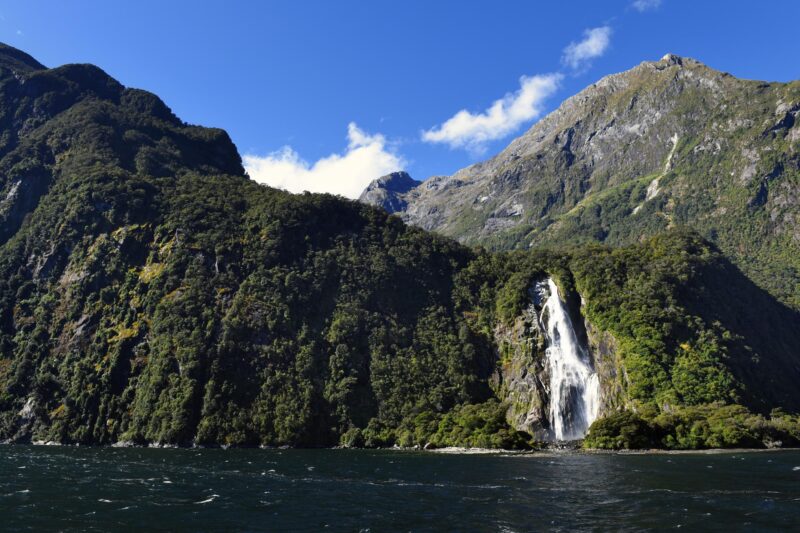
Rudyerd Bay is one of the highlights of the Misty Fiords, 40 miles east of Ketchikan, along the Inside Passage. This fjord cuts through steep-sided mountainous terrain and extends far into the mainland. The scenery is stunning, with dramatic thousand-foot waterfalls plunging down rainforest covered cliffs to the water below.

Just 40 mi (66 km) south of the Alaskan border, Prince Rupert is the largest community on British Columbia's north coast. Set on Kaien Island at the mouth of the Skeena River and surrounded by deep green fjords and coastal rain forest, Prince Rupert is rich in the culture of the Tsimshian, people who have been in the area for thousands of years. As the western terminus of Canada's second transcontinental railroad and blessed with a deep natural harbor, Prince Rupert was, at the time of its incorporation in 1910, poised to rival Vancouver as a center for trans-Pacific trade. This didn't happen, partly because the main visionary behind the scheme, Grand Trunk Pacific Railroad president Charles Hays, went down with the Titanic on his way back from a financing trip to England. Prince Rupert turned instead to fishing and forestry. A port of call for both BC and Alaska ferries, but relatively new to cruise ships, this community of 15,000 retains a laid-back, small-town air.
Alert Bay is a small village on Cormorant Island, with approximately 1,300 residents. More than half are First Nations people. The settlement was named in 1860 in honour of the Royal Navy ship HMS Alert, which conducted survey operations in the area. The traditional Kwakwaka’wakw people of Alert Bay have endured a difficult history of devastating foreign diseases and failed government policies of assimilation. Today there is a revival of their traditions. One of the most well-known features in Alert Bay is the 173 foot wooden carved totem pole, claimed by some to be the tallest totem pole in the world.
Vancouver is a delicious juxtaposition of urban sophistication and on-your-doorstep wilderness adventure. The mountains and seascape make the city an outdoor playground for hiking, skiing, kayaking, cycling, and sailing—and so much more—while the cuisine and arts scenes are equally diverse, reflecting the makeup of Vancouver's ethnic (predominantly Asian) mosaic. Vancouver is consistently ranked as one of the world's most livable cities, and it's easy for visitors to see why. It's beautiful, it's outdoorsy, and there's a laidback West Coast vibe. On the one hand, there's easy access to a variety of outdoor activities, a fabulous variety of beaches, and amazing parks. At the same time, the city has a multicultural vitality and cosmopolitan flair. The attraction is as much in the range of food choices—the fresh seafood and local produce are some of North America's best—as it is in the museums, shopping, and nightlife.Vancouver's landscaping also adds to the city's walking appeal. In spring, flowerbeds spill over with tulips and daffodils while sea breezes scatter scented cherry blossoms throughout Downtown; in summer office workers take to the beaches, parks, and urban courtyards for picnic lunches and laptop meetings. More than 8 million visitors each year come to Vancouver, Canada's third-largest metropolitan area. Because of its peninsula location, traffic flow is a contentious issue. Thankfully, Vancouver is wonderfully walkable, especially in the downtown core. The North Shore is a scoot across the harbor, and the rapid-transit system to Richmond and the airport means that staying in the more affordable ’burbs doesn't have to be synonymous with sacrificing convenience. The mild climate, exquisite natural scenery, and relaxed outdoor lifestyle keep attracting residents, and the number of visitors is increasing for the same reasons. People often get their first glimpse of Vancouver when catching an Alaskan cruise, and many return at some point to spend more time here.
No hard sell. Just excellent advice.
And Penguins.




Try us and Save £500 on your first booking*
Our website uses cookies to give you the best and most relevant experience. By clicking on accept, you give your consent to the use of cookies as per our privacy policy.