Quick facts:
- Svalbard has a total population of 2,936 residents who live across the 5 different settlements, all located on Spitsbergen.
- Longyearbyen is the largest settlement in Svalbard with approximately 2,100 residents.
- Longyearbyen has inhabitants from 50 different countries, thanks to its visa-free zone, making it one of the most culturally diverse places on Earth.
- The smallest population of 10 people lives at the Polish research station in Hornsund.
- Svalbard’s population varies depending on the season, with many guides arriving in the summer for work.
- Svalbard’s population is increasing year on year.
- The Svalbard population is not native; everyone living there is from elsewhere, and women must leave the archipelago to give birth.
Svalbard is a remote Norwegian archipelago in the Arctic Ocean. Located between mainland Norway and the North Pole, the Svalbard archipelago is one of the world’s most northerly inhabited places. The extreme northern latitude shapes the environment and daily life on the islands. This remote group of islands, dominated by glaciers and polar bears, has a surprisingly diverse population that tells the story of Arctic settlement, international cooperation and modern frontier living.
Known for its jaw-dropping polar scenery, the Svalbard archipelago draws in wildlife enthusiasts, visitors and adventurers to experience a beauty seen nowhere else on Earth. Picture a place where polar bears roam free across the landscape, alongside Arctic foxes and reindeer, and marine mammals swim in the freezing ocean. It’s no wonder that people choose to live here.
The Svalbard Treaty of 1920 established Norwegian sovereignty over the islands, allowing anyone to live here visa-free. Today, Svalbard is a unique mix of international cooperation and Norwegian governance.
The largest island, Spitsbergen, hosts most of the Norwegian settlements, including the lively community of Longyearbyen. Svalbard’s Arctic environment, wildlife and scenery make it a magnet for scientific research, wildlife viewing and adventure. A recent tourism boom in the Arctic has fuelled this.
Current population of Svalbard: A small but growing community

As of January 2025, the total population of Svalbard is approximately 2,556 people in the Norwegian settlements. According to Statistics Norway (Statistisk Sentralbyrå), this is the official count of residents in Longyearbyen and Ny-Ålesund.
When including the Russian settlements of Barentsburg and Pyramiden, as well as the Polish research station in Hornsund, the total population is around 2,936 people. All of these settlements are located on the main island of Spitsbergen, which is the largest and most populous island in the Svalbard archipelago.
The breakdown of the current population is 1,691 Norwegians and 865 non-Norwegians in Longyearbyen and Ny-Ålesund; 297 in Barentsburg and Pyramiden; and 10 in Hornsund. Longyearbyen is the administrative capital and largest settlement, with the majority of Svalbard’s population.
Growing population
Unlike many other Arctic communities that are declining in population, Svalbard has had a significant population growth in the last 15 years. This is driven by the recent Arctic tourism boom. The population in Norwegian settlements on Svalbard has increased due to foreign residents over the previous 15 years. While the number of residents from mainland Norway has been the same, the number of residents from abroad has grown 196% from 2009 to 2024.
This is a significant change in Svalbard’s demographics thanks to expanded research activities, the growing tourism industry, mining operations, and the opportunities that life in the Arctic presents to international professionals and researchers.
Svalbard’s climate is milder than other regions at the same latitude, which may make it more appealing for residents and researchers.
Can You Live In Svalbard?
You can live and work in Svalbard indefinitely as long as you can support yourself and comply with local laws.
The legal framework governing residency in Svalbard is unique due to the 1920 Svalbard Treaty, which grants Norway sovereignty while allowing citizens of signatory countries to live and work there without visas.
However, Norway has established practical requirements that effectively control who can stay. You must have a job and housing arranged before arriving, as there’s no social safety net or unemployment benefits.
Additionally, pregnant women and seriously ill individuals are required to leave for mainland Norway, as the local hospital cannot handle complex medical situations.
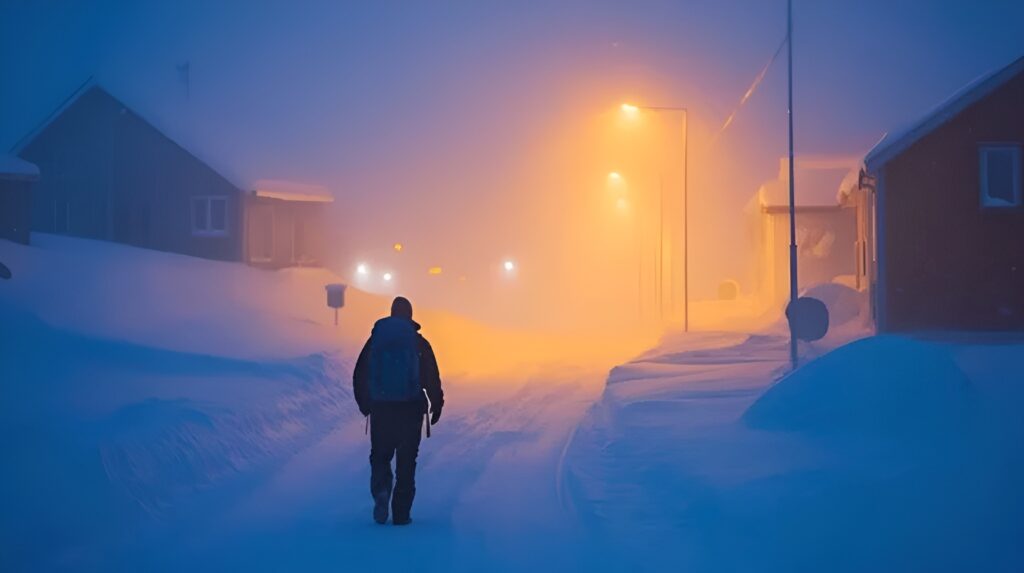
Historical population: From uninhabited to international settlement
The human history of Svalbard is relatively short compared with other populated places on Earth. Svalbard was discovered by the Dutch explorer Willem Barentsz in 1596, marking the beginning of European exploration in the region. Barentsz played a key role in mapping and naming parts of the archipelago. After him, English and Dutch, Norwegians and Danes followed, and eventually Russians. But the archipelago remained uninhabited for centuries.
The first significant human presence came with the whaling industry. Dutch and English whalers arrived as early as 1611, followed by French, Hanseatic, Danish and Norwegian whalers whose quarrels over whaling rights resulted in the division of the coast. The Russians arrived about 1715. During the 17th and 18th centuries, Svalbard became an international whaling base, with multiple nations establishing whaling stations throughout the archipelago. These early visitors were seasonal, establishing temporary whaling stations but not permanent communities.
20th Century
It’s a little-known fact that tourism outdates mining in Svalbard. Tourism began in Svalbard in the early 20th century as the first cruise ships arrived in the archipelago. John Munroe Longyear arrived on a cruise ship to discover the mining potential of the islands.
Permanent settlement began in the early 20th century with the establishment of coal mines, which played a crucial role in shaping the communities.
By the 1930s, all settlements on Svalbard were either Norwegian or Soviet. Notably, one former coal mine was later repurposed to house the Global Seed Vault, safeguarding the world’s seeds in a secure, underground facility.
This was the beginning of Svalbard’s modern demographic structure, with Norwegian and Soviet interests laying the foundation for today’s international community.
The Second World War brought temporary disruption, as the settlements were evacuated and then subsequently bombed by the Kriegsmarine. They were later rebuilt after the war. The post-war reconstruction laid the ground for the contemporary settlements we see today.
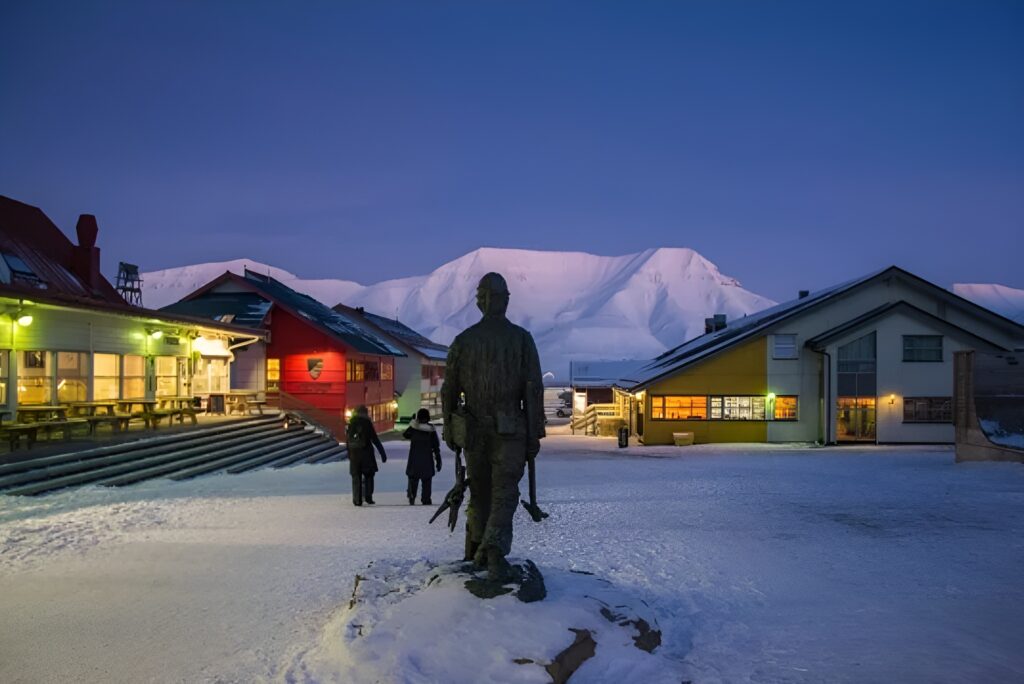
Contemporary demographics: A multinational Arctic community (Statistics Norway)
Nationality breakdown
Modern Svalbard has a surprisingly diverse demographic profile for such a remote place. According to recent data, the largest ethnic group is Norwegian, 61.1% with a foreign population of 38.9% (mainly Russians, Thais, Swedes, Filipinos and Ukrainians). This reflects the international nature of Svalbard’s economy and research activities. The Svalbard Act regulates residency, rights and legal protections for all inhabitants, which contributes to the multinational character of the community.
Settlement distribution
Svalbard’s population is mainly concentrated in a few settlements on the island of Spitsbergen, mainly on the south side of Isfjorden, including Longyearbyen. All major settlements are located on the island of Spitsbergen, which serves as the hub for population centres, scientific research stations and historical sites.
The West Coast is often ice-free for about half the year, making it more accessible for transportation and settlement. In contrast, the northeastern coast can be icebound and sometimes block maritime traffic, explaining why it was never settled.
Longyearbyen is the main administrative centre and largest settlement, home to most of the Norwegian and international residents. This town is the de facto capital with the university centre, hospital, school, Norwegian authorities and main commercial activities.
Barentsburg is the second largest settlement in Svalbard and the most significant Russian settlement, with around 470 people living in the modern mining community. This community maintains Russian culture and language within the Svalbard Treaty framework.
Ny-Ålesund is an international research station hosting scientists from various countries doing Arctic research located in Kongsfjord.
Pyramiden is a former Russian mining town that had a population of 1,000 people at its peak. Today, fewer than 10 people live in the Soviet ghost town of Pyramiden, which is now a tourist destination and research site.
Hornsund has a small Polish research station with 10 residents.
Economy and industry
Svalbard’s economy is shaped by its Arctic environment and international status according to the Svalbard Treaty. Coal mining has been the primary industry since the early 20th century, with both Norwegian and Russian companies operating here.
Tourism has grown rapidly in recent years with people coming to see polar bears, Svalbard reindeer and Arctic terns. The Norwegian government and the University Centre in Svalbard sustainably manage these resources, balancing economic activity with strong environmental protection. Research is another essential pillar with scientists from all over the world coming to study Arctic biology, climate and geology.
The Norwegian authorities have implemented strict regulations to make sure tourism and industry can coexist with the fragile environment and preserve Svalbard’s wild beauty for future generations.
Infrastructure and Transportation
Getting around Svalbard is an adventure in itself, as there are no roads connecting the settlements. Most travel is done by snowmobile, boat or aircraft, with Svalbard Airport in Longyearbyen as the main gateway to and from mainland Norway. I highly recommend a Svalbard expedition cruise if you are visiting during the summer months, as it offers the only way to see some of the most captivating places Svalbard has to offer.
The Norwegian Coast Guard and the University Centre in Svalbard provide essential support for research expeditions and tourism operations, ensuring safe passage through the often unpredictable Arctic conditions.
Longyearbyen, the largest settlement, has the necessary amenities like healthcare, schools and shops, all managed by the Norwegian municipality. Despite the remote location, residents and visitors have a well-organised infrastructure to support daily life and Arctic exploration.
Health and Wellness
Health and wellness are a top priority in Svalbard given the isolation and harsh climate. The University Centre in Svalbard and the Norwegian authorities have medical facilities and emergency response systems in place to ensure the safety of residents and visitors. The Norwegian Polar Institute researches the effects of the Arctic environment on human health to inform best practices for living and working in these conditions.
Population Growth Factors
Several factors contribute to Svalbard’s population growth:
Research and Education: The University Centre in Svalbard (UNIS) attracts international students and researchers. Arctic research has become more important due to climate change, making Svalbard a key scientific hub. Rising winter temperatures are a big concern as they melt sea ice and threaten Arctic wildlife.
Economic Opportunities: While coal mining has declined, new economic activities like tourism, research support services and renewable energy projects create jobs that attract international workers. The northern lights attract visitors from all over the world. At the same time, the presence of polar bears requires careful management and respect for local regulations.
Unique Lifestyle: Some residents are drawn by the Arctic experience, the community and the nature. Svalbard offers the extraordinary experience of the midnight sun during summer, when the sun is visible at midnight for several months, and the polar night in winter, with about three months of continuous winter darkness from late October to February. These extreme periods of daylight and darkness shape daily life and the overall lifestyle in the region.
Strategic Location: Svalbard is necessary for various industries and research activities, from Arctic shipping routes to satellite communications.
Challenges and Future
Despite the growth trend, Svalbard faces unique demographic challenges. The harsh climate, limited infrastructure, high cost of living and strict residency requirements under Norwegian law are barriers to growth. 2556 people were living in the Norwegian settlements (Longyearbyen, Ny-Ålesund) on 1 January 2025, a decrease of 61 people compared to the previous year, so growth may not be year-over-year.
The future of Svalbard’s population will depend on international cooperation, climate change impacts on Arctic accessibility and evolving economic opportunities in this unique place.
Svalbard Population Summary
Svalbard’s population story is one of change from an uninhabited Arctic wilderness discovered in 1596 to a multinational community of almost 3000 people from dozens of countries. The population is spread across the main island of Spitsbergen. The 196% growth of foreign residents in the last 15 years shows the archipelago’s growing importance as an Arctic research hub, economic opportunities and international cooperation.
Although small in numbers, Svalbard is a unique model of multinational Arctic settlement where Norway and international participation, traditional industries and research, human ambition and environmental responsibility coexist. As the Arctic is put in the global spotlight due to climate change, Svalbard’s diverse and growing community will be more critical than ever.
Explore Svalbard With Polar Escapes
Are you looking to explore Svalbard for yourself? At Polar Escapes we are the experts in travel to Svalbard and our team have lots of first-hand experience to share with you as you plan your trip.
As a next step why not browse our selection of Svalbard cruises and tours?
Happy Exploring.